

How Many Hours a Week Do You Actually Need to Train for a 70.3
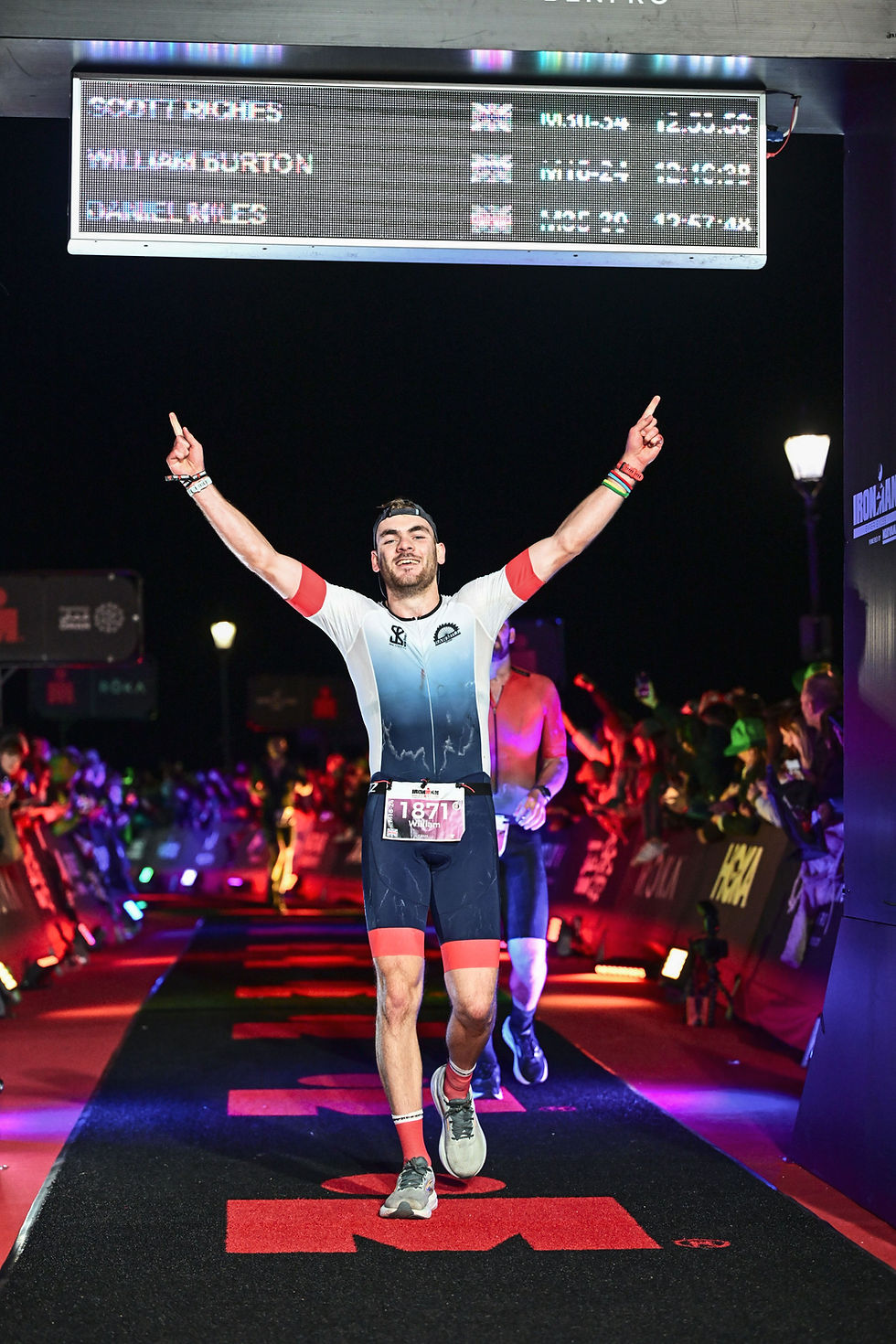
You've signed up for a 70.3. Or you're about to. And somewhere between the excitement and the entry fee confirmation email, the real question arrives: how much of your actual life is this going to take?
It's a fair question, and most of the answers online aren't especially honest about it. Some plans promise a 70.3 finish on four hours a week, which is optimistic at best. Others assume you can train fifteen hours a week with no job, no family and no other life to speak of. Neither is particularly useful if you're a working adult trying to figure out whether this is genuinely realistic for you.
So here's a straighter answer, built on what the research actually says about minimum effective training, not on what sounds good in a sales page.
The Honest Answer: How Many Hours a Week You Actually Need
For most amateur triathletes with a reasonable existing fitness base, six to eight hours a week is enough to prepare properly for a 70.3, provided the training is structured well. Some athletes will need closer to ten, particularly if they're newer to one of the three disciplines. Very few genuinely need more than twelve.
That range surprises people, because it's lower than what a lot of training plans imply. But the research on endurance training doesn't support the idea that more hours automatically means more fitness. What matters far more is what you do with the hours you have.
What the Research Says About Minimum Training Volume for Triathlon
Volume Without Intensity Has Real Limits
A 2024 study published in PLOS One compared cyclists doing high volumes of low-intensity training against a much smaller group doing low-volume, higher-intensity work over ten weeks. The low-intensity group trained for roughly 6.7 hours a week; the higher-intensity group trained for just 1.6 hours a week. The finding worth paying attention to: high volumes of easy training improved easy-effort performance, but only the higher-intensity training improved harder-effort capacity, aerobic capacity, threshold power and top-end performance among them.
The practical takeaway for a time-crunched 70.3 athlete isn't "skip your easy sessions", easy volume still matters enormously for building your aerobic base and durability. It's that piling on extra easy hours doesn't substitute for a smaller number of purposeful, harder sessions. If your six to eight hours a week are all comfortable and conversational, you're leaving real fitness on the table. A handful of sessions each week with genuine purpose, race-effort intervals, threshold work, tempo running, matter more than simply adding volume.
Why Consistency Beats Big Weeks
The other principle worth understanding is the overload principle itself: your body only adapts to a training stimulus it can actually recover from. Training research consistently points to gradual, sustained load, commonly cited as keeping weekly increases to around 10 percent, as producing better long-term adaptation than sporadic big-volume weeks followed by burnout or injury.
This matters more for busy athletes than almost anyone else, because the temptation is to cram. A free Saturday becomes a five-hour ride "to catch up." A stressful work week becomes an excuse to skip everything rather than scale it back. Both patterns undermine the training far more than simply having fewer hours available in the first place. A consistent six hours a week, every week, will get you further than an inconsistent ten.
A Realistic 70.3 Training Schedule for a Full-Time Job
There's no single correct split, but a sensible structure for someone training six to eight
hours a week, across swim, bike and run, tends to look something like this:
Two swim sessions, roughly 40 to 60 minutes each, one technique-focused, one endurance-focused
Two to three bike sessions, one shorter session with structured intervals, one longer steady ride at the weekend
Two to three run sessions, mostly easy effort, with one session carrying some faster, controlled work
One brick session every one to two weeks, a short run straight off the bike, to build race-specific fitness and familiarity
One strength session, 20 to 30 minutes, focused on the muscles that keep you durable through a long training block
That's a full, genuinely effective week without requiring five hours of free time on any single day. The long ride is usually the biggest single time commitment, and even that can be built gradually rather than jumping straight to race-distance rides.
Triathlon Training for Busy People: Three Levers That Matter More Than Hours
Session Purpose
Every session should have a clear job to do. An easy run should be genuinely easy, not a moderate effort that leaves you too tired for the session that actually needs your energy. A hard session should be hard enough to matter. Blurring the two together, the most common mistake among self-coached athletes, means you get the fatigue cost of hard training without the full benefit of it.
Consistency Across Weeks
A six-week block completed consistently will outperform an eight-week block with three missed weeks scattered through it. If you can only realistically commit to six hours a week for the next six weeks, plan around that honestly rather than writing a plan for eight hours and quietly failing to hit it.
Recovery and Life Stress
Training load doesn't exist in isolation from the rest of your life. A demanding work week, poor sleep or general life stress all reduce your capacity to absorb training, even if your actual hours on the bike or in the pool stay the same. This is precisely the piece a static plan downloaded from the internet can't see, and it's a large part of why two athletes following an identical plan can have very different experiences of it.
What Changes as Race Day Gets Closer: Half Ironman Training Time Commitment
Training for a 70.3 typically moves through recognisable phases. Early weeks build a broad aerobic base at manageable effort. Middle weeks introduce more race-specific work, longer rides, brick sessions, faster running off tired legs. The final two to three weeks before race day taper down in volume while keeping some intensity, so you arrive on the start line recovered rather than simply rested. None of this requires dramatically more weekly hours than the base you've already built, it requires those hours to be spent differently as the goal gets closer.
How to Know If You're Training Enough, Or Training Too Much
Two signs tend to matter more than anything else. If your key sessions, the ones that are supposed to feel moderately hard, consistently feel much harder than they should at a familiar effort, that's usually the first sign your training load and your recovery are out of balance. And if your mood is quietly flattening, more fatigue, less enthusiasm for sessions you'd normally enjoy, that's a genuine signal worth listening to, not something to push through.
On the other side, if six weeks of structured training has felt comfortably manageable throughout, that's a sign you likely have capacity to build further, not a sign the plan was wrong.
Try a Free 70.3 Training Plan for Beginners Before You Commit
If you're still working out whether a 70.3 is realistic around your job, your training history, or simply want to see what properly structured training actually feels like before committing to a full coached plan, that's exactly what Six Weeks With LimitX was built for.
It's a free six-week 70.3 taster, built around six to eight hours a week, with exact sessions rather than vague instructions to "ride easy", real bike main sets, named swim drills, an RPE to heart rate guide, and a Training Readiness Assessment at the end so you finish with a genuine answer, not a guess, about what a full coached plan could do for you.
No credit card required. .


Comments